

The Canadian Gold Maple Leaf changed what the world expected from a bullion coin. When it debuted in 1979, it offered something no major competitor did: gold refined to a purity so high that the coin needed no alloy at all.
More than four decades later, it remains one of the most recognized and heavily traded gold coins on earth.
However, the Royal Canadian Mint’s gold story runs deeper than a single design, stretching from Ottawa sovereigns struck for the British Empire to a 100-kilogram coin worth a million dollars.
For anyone interested in gold, the evolution of Canadian gold coins is fascinating.
The History of Canadian Maple Leaf Gold Coins
Its 1979 Debut
The Royal Canadian Mint launched the Gold Maple Leaf in 1979, at a moment when investors had very few options for buying government-issued gold.
The South African Krugerrand dominated the market, but growing opposition to apartheid was making it politically difficult to own and eventually impossible to import into several countries.
Canada stepped into that gap with a coin that was politically neutral and purer than anything else available. The first issues had a fineness of .999, meaning 99.9% gold. They came only in the 1-ounce size with a $50 face value.
The Move to Four Nines
In 1982, the Mint raised the standard to .9999 fine, or 99.99% pure gold, and that specification has defined the series ever since. The “four nines” figure was a genuine technical achievement and became a marketing signature.
Certain special issues have gone even further, reaching .99999 fine. Collectors refer to these as “five nines.”
Gold Canadian Maple Leaf Coin Design
The Reverse: A Single Sugar Maple Leaf
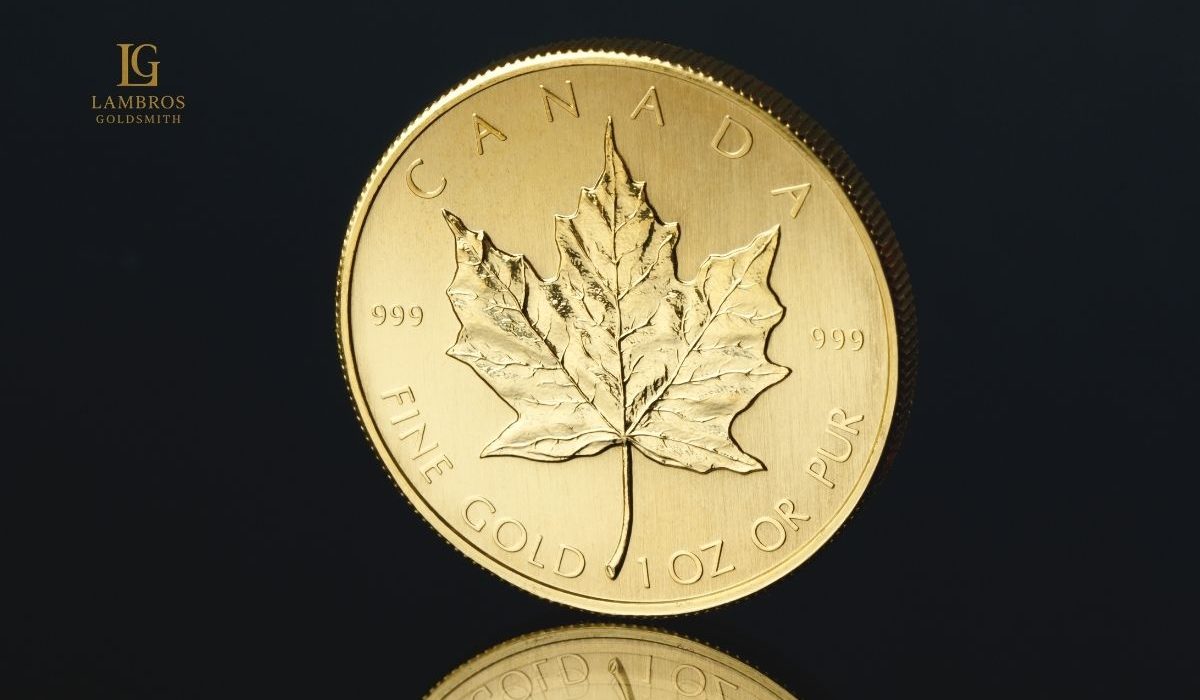
Walter Ott designed the reverse, and it has barely changed in over 40 years. A single sugar maple leaf sits at the center, surrounded by the word CANADA, the weight, and the fineness rendered in both English and French.
The simplicity is the point. It’s instantly identifiable at a glance anywhere in the world.
The Obverse: Four Portraits, Two Monarchs
The obverse has evolved with the Crown, and being able to date a Maple Leaf by its obverse portrait is a useful skill for any new collector.
- Coins from 1979 through 1989 carry Arnold Machin’s youthful portrait of Queen Elizabeth II.
- From 1990 to 2004, the Mint used Dora de Pédery-Hunt’s more mature effigy, the first Canadian coin portrait of the Queen designed by a Canadian.
- Susanna Blunt’s uncrowned portrait appeared from 2005 through 2022.
- Beginning in 2023, coins bear the portrait of King Charles III.
Built-In Security Features
Starting in 2013, the Mint added a micro-engraved laser mark to the reverse, a tiny maple leaf containing the final two digits of the year, readable only under magnification.
In 2015, it added precision radial lines machined across the surface, creating a light-diffracting pattern that is extremely difficult to counterfeit. These features make modern Maple Leafs among the easiest bullion coins to authenticate.
Canadian Gold Maple Leaf Sizes and Denominations
Gold Maple Leafs are produced in five sizes, each with a different face value.
| Size | Face Value | Diameter | Introduced |
| 1 oz | $50 | 30.0 mm | 1979 |
| 1/2 oz | $20 | 25.0 mm | 1986 |
| 1/4 oz | $10 | 20.0 mm | 1982 |
| 1/10 oz | $5 | 16.0 mm | 1982 |
| 1/20 oz | $1 | 14.1 mm | 1993 |
The Mint has also produced 1-gram coins sold in sheets of 25, which is a convenient format for very small purchases.
The Odd One Out
For a single year in 1994, Canada issued a 1/15-ounce Maple Leaf with a $2 face value.
It was never repeated, and because it was produced in modest numbers (just under 5,500), it now trades at a substantial premium. It’s the closest thing the modern series has to a key date.
Purity: What .9999 Actually Means

A .9999 fine Maple Leaf contains virtually no impurities, and no alloy is added. That means a 1-ounce coin weighs exactly 1 troy ounce, or 31.10 grams, unlike 22-karat bullion coins that weigh roughly 9% more to accommodate their alloy content.
Buyers who want the simplest possible math often prefer Maple Leafs for this reason.
The Tradeoff: Milk Spots and Soft Surfaces
Pure gold is soft. Maple Leafs pick up handling marks, rim nicks, and fingerprints more easily than harder 22-karat coins, and the series has a well-documented tendency to develop milk spots, which are small whitish blemishes that can appear months or years after minting.
Milk spots do not affect gold content or bullion value, but they can reduce what a collector will pay for a coin sold as pristine. Handling coins by the edges and leaving them in original packaging helps prevent this issue.
Canadian Gold Coins Value
Bullion Premiums
The value of a standard Maple Leaf is the gold spot price multiplied by its weight, plus a dealer premium. With gold trading in the low $4,000s per ounce during 2026, a 1-ounce Maple Leaf typically retails in the $4,200 to $4,400 range, but this fluctuates with spot price movement.
Premiums on 1-ounce coins tend to run slightly lower than on comparable American issues, which is part of their appeal to cost-conscious buyers. Fractional sizes carry proportionally higher premiums because minting costs don’t shrink with the coin.
When Maple Leafs Carry Collector Premiums
Most Maple Leafs are worth metal value. Exceptions include the 1994 1/15-ounce issue, early .999 fine coins from 1979 through 1981, low mintage fractional years, “five nines” special editions, and coins graded perfect by a third-party service.
Anything sold in original Mint packaging with certificates holds value better than a loose coin.
Are Canadian Maple Leaf Gold Coins a Good Investment?
These coins are exceptionally liquid, government guaranteed, easy to authenticate, and eligible for self-directed retirement accounts because their fineness exceeds the required minimum.
Premiums are competitive, and worldwide recognition means you can sell them almost anywhere, so yes, these can be a good investment to add to your portfolio.
However, the usual caveats apply:
- Gold generates no income.
- Prices swing significantly.
- Physical metal requires secure storage and insurance.
- Gains are typically taxed at the higher collectibles rate in the United States.
- Unlike American Gold Eagles, Canadian gold Maple Leaf coins sit on the list of bullion products that trigger dealer reporting requirements above certain transaction sizes.
- Most financial professionals treat bullion as a modest portfolio diversifier rather than a primary holding.
Specialized Royal Canadian Mint Gold Bullion Series
Themed Bullion Series
Beyond the Maple Leaf, the Mint has produced several sought-after bullion series. The Call of the Wild program featured animals including the howling wolf, growling cougar, and roaring grizzly, struck in .99999 fine gold.
Birds of Prey and Predator series followed similar formats. These carry higher premiums than standard Maple Leafs and attract collectors as much as investors.
Special Edition Maple Leafs
The Mint regularly issues variations on the core design, including incuse strikes where the leaf is pressed into the surface rather than raised, reverse proofs, gilded and colorized versions, privy mark issues celebrating anniversaries and events, and fractional sets sold as a group.
The Million Dollar Coin
In 2007, the Mint produced six 100-kilogram Maple Leaf coins with a face value of 1 million dollars, struck in .99999 fine gold. Only five are thought to still exist, as one was famously stolen from a Berlin museum in 2017 and has never been recovered.
Commemorative and Numismatic Canadian Gold Coins
Canada’s modern commemorative gold program began with the $100 gold coin issued for the 1976 Montreal Olympics, offered in both 14-karat and 22-karat versions. That annual $100 series has continued for decades, joined later by $200 and higher denominations.
The Mint has become known for technically ambitious numismatic gold, including ultra-high relief strikes, holograms, gemstone inlays, and elaborately colorized designs.
These coins are bought for artistry and low mintages rather than metal content, and their value depends heavily on collector demand rather than the gold market.
Historical Canadian Gold Coins
Ottawa Mint Sovereigns
From 1908 to 1919, the Ottawa branch of the Royal Mint struck British gold sovereigns bearing a small C mintmark.
Most are affordable, but the 1916-C is one of the great rarities of Commonwealth numismatics, with only a few dozen believed to survive from a small mintage. Examples typically command six figures.
The $5 and $10 Gold Coins of 1912 to 1914
Canada issued its own $5 and $10 gold coins for just three years before the First World War ended the program.
Struck in .900 fine gold with the Canadian coat of arms on the reverse and George V on the obverse, large quantities sat in government reserves for a century before being released to collectors.
Today, they remain the most accessible historical Canadian gold coins for a new collector.
Newfoundland Two Dollar Gold
Before Newfoundland joined Confederation in 1949, the colony issued its own $2 gold coins between 1865 and 1888. They’re a favorite among specialists because they’re small, scarce, and historically distinct.
Where To Buy Canadian Maple Leaf Gold Coins
The Royal Canadian Mint distributes bullion through authorized dealers rather than selling it directly at retail, but numismatic and commemorative issues are sold through the Mint’s own channels.
Local coin shops, established national bullion dealers, and major auction platforms all handle Maple Leafs. Compare total delivered cost against spot rather than headline prices, confirm the dealer’s buyback policy before ordering, and favor coins from 2015 onward if easy authentication is important to you.
Build Your Canadian Gold Collection With Confidence
Canadian gold coins rewards collectors on two fronts.
- The Maple Leaf offers pure, liquid, easily authenticated bullion at competitive premiums, making it one of the safest entry points into precious metals.
- The Royal Canadian Mint’s specialty series, commemoratives, and the historical Ottawa Mint issues open a genuinely deep collecting field with room to specialize.
For many collectors, the Canadian Maple Leaf is only the beginning.
Learning how purity, mintages, security features, and historical context influence value will help you build a collection with greater confidence and appreciate the broader story behind Canada’s remarkable gold coinage.
Frequently Asked Questions About Canadian Gold Coins
How pure are Canadian Gold Maple Leaf coins?
Coins from 1982 onward are .9999 fine, or 99.99% pure gold. The 1979 through 1981 issues are .999 fine. Certain special editions reach .99999 fine.
Do Maple Leafs weigh exactly 1 ounce?
Yes. Because there is no significant alloy, a 1-ounce Maple Leaf weighs a full troy ounce. 22-karat coins of the same gold content weigh noticeably more.
Are milk spots a serious problem?
Milk spots don’t change the gold content or bullion value, but they can lower what collectors are willing to pay. Store coins in original packaging and handle them by the edges to reduce the risk.
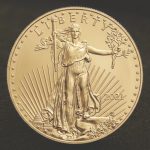
Which is better, a Maple Leaf or an American Gold Eagle?
Neither is objectively better. Maple Leafs are purer with typically lower premiums. Eagles are harder and more scratch resistant, and they avoid certain dealer reporting requirements in the United States.
Are older Maple Leafs worth more than new ones?
No, older Canadian Maple Leafs are not usually worth much more than new ones. Early .999 fine issues and the 1994 1/15-ounce coin are the notable exceptions that carry real collector premiums.