

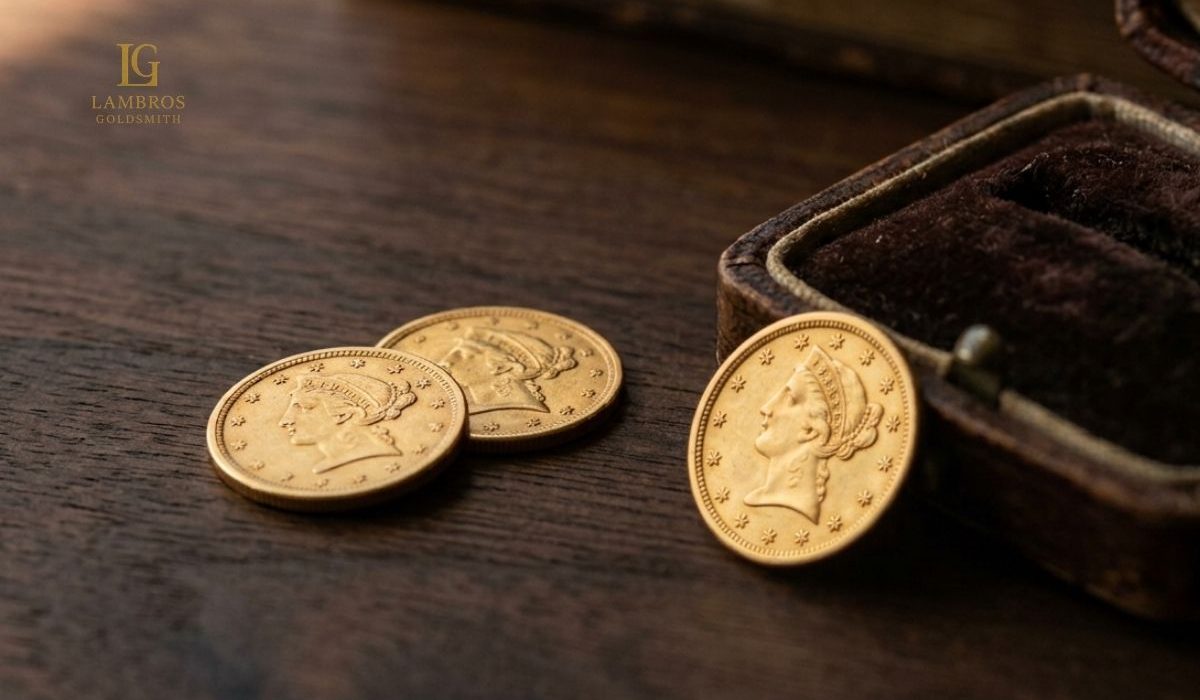
Perhaps you found a tiny gold coin in a jewelry box, an old envelope, or a relative’s estate, and now you want a real answer regarding value. So, how much are $1 gold coins worth?
A $1 gold coin containing real gold can be worth a few hundred dollars or several thousand, and the gap between those outcomes depends on type, date, mintmark, and condition.
This guide explains what genuine dollar gold coins are, what they contain, what they sell for today, and how to avoid the mistakes that destroy value.
First, Make Sure You Have a Real Gold Dollar
Before you look up prices, confirm you’re holding actual gold because not all $1 gold coins are worth more than their face value.
Modern Golden Dollars Contain Zero Gold
The Sacagawea dollars issued since 2000 and the Presidential dollars from 2007 through 2016 are gold in color only. They’re struck from a manganese brass alloy over a copper core with no precious metal content whatsoever.
In circulated condition, they’re worth exactly one dollar. Susan B. Anthony dollars, which are silver in appearance, contain no silver either.
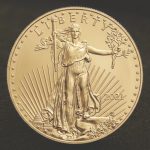
If your coin is the size of a quarter and features Sacagawea, a president, or a Statue of Liberty reverse, it’s a modern circulating dollar, not a rare gold coin.
What a Genuine $1 Gold Coin Looks Like
Authentic United States gold dollars were struck from 1849 through 1889. They are astonishingly small (smaller than a modern dime), and they’re the tiniest coins the U.S. Mint has ever produced for circulation.
Each one weighs 1.672 grams and is 90% gold with 10% copper, giving an actual gold weight of 0.04837 troy ounces.
If there is a mintmark, it appears on the reverse, below the wreath. Philadelphia coins carry no mintmark, while C stands for Charlotte, D for Dahlonega, O for New Orleans, and S for San Francisco.
One note: Small California fractional gold pieces from the Gold Rush era are often mistaken for federal gold dollars. Genuine U.S. gold dollars always spell out the full denomination and carry standard federal designs.
The Melt Value Floor
Every genuine gold dollar has a baseline worth tied to its metal content. Multiply the current gold spot price by 0.04837 to get the melt value.
With gold currently trading in the low $4,000s per ounce as of mid-2026, that puts the intrinsic value of a $1 gold coin right around $200, though the market is always moving.
That number is the floor, not the answer. Almost no gold dollar sells at melt value because collector demand keeps prices well above bullion. Melt price matters mainly for badly damaged pieces.
The Three Types of Dollar Gold Coins
James B. Longacre designed all three types, and identifying yours takes about 10 seconds.
Type 1: Liberty Head (1849 to 1854)
The first design shows Liberty facing left in a coronet, with a simple wreath on the reverse. Type 1 coins measure just 13 millimeters across.
Mintages were large at Philadelphia, so common dates are the most affordable entry point into gold dollar coins. Branch mint issues from Charlotte and Dahlonega are a different story and carry heavy premiums.
Type 2: Small Indian Head Princess (1854 to 1856)
The Mint widened the coin to about 15 millimeters and thinned the planchet, replacing Liberty with a slender female head wearing a feathered headdress.
The design was too high in relief for the thin blank, so most survivors show weak strikes, particularly on the numerals of the date and the letters of DOLLAR.
Type 2 is the shortest series and the scarcest of the three, which makes it the type most collectors need and the hardest to find well struck.
Type 3: Large Indian Head (1856 to 1889)
The final design enlarged the portrait and lowered the relief, thus fixing the striking problems. Type 3 ran for more than three decades.
Philadelphia mintages collapsed in the 1870s and 1880s, with some years producing less than 10,000 coins, but collectors and speculators saved them aggressively at the time.
That means many low-mintage late dates survive in gem uncirculated condition and are more available than the mintage suggests.
So, How Much Are $1 Gold Coins Worth?
You’ll find realistic retail ranges below. Every figure moves with the gold market and with collector demand, so treat them as orientation rather than gospel.
Common Dates in Circulated Condition
A common Philadelphia Type 1 or Type 3 gold dollar showing honest wear typically brings roughly $350 to $500. These are the gold coins most people inherit. They are attractive, historic, and genuinely collectible, but they’re not rare.
Uncirculated and Proof Examples
A common date with no wear and original luster generally runs $550 to $1,200, climbing sharply in the highest grades.
Gem examples of late Type 3 dates can reach several thousand dollars. Proof gold dollars, struck in tiny numbers for collectors, routinely bring $5,000 and up.
Type 2 Coins
Because the type is difficult to find, even a well-worn common Type 2 usually starts around $700 to $1,200. Uncirculated examples with full detail frequently exceed $3,000, and gem pieces go far higher.
Rare Dollar Gold Coins and Branch Mint Issues
This is where the numbers change.
- Charlotte and Dahlonega gold dollars were struck in small quantities and are scarce in any grade, often bringing $2,500 to $15,000 or more.
- The 1855-D, with a mintage of only 1,811, and the 1856-D at 1,460 are major keys.
- The 1875 Philadelphia issue had a business strike mintage of just 400 coins. The auction record is currently $168,000.
- The 1861-D was struck at Dahlonega after Confederate forces seized the mint, and examples regularly sell in the five and six figure range.
- At the very top, the 1849-C Open Wreath is known from roughly five pieces and has sold for well into six figures and beyond.
Damaged, Cleaned, or Jewelry Coins
Solder marks, bezel scrapes, drilled holes, polishing, and harsh cleaning all cause severe losses. A cleaned common date may fetch only slightly more than melt value.
Never attempt to remove a mount, repair a hole, or brighten a coin yourself. Damage that a professional can document is far less costly than damage you create.
Why a Professional Coin Appraisal Is a Smart Move
Photographs and online price charts can give you a rough idea of gold coin value. However, they do not tell you whether a coin has been cleaned, lightly repaired, or counterfeited, and those judgments swing value by thousands of dollars.
A professional appraisal is by far the most accurate way to determine value in today’s market.
When Certification Pays for Itself
If your $1 gold coin carries a branch mintmark, is a Type 2, is a low-mintage late date, or simply looks uncirculated, independent authentication and grading may worth the fee.
Certified coins generally sell faster, attract more bidders, and command higher prices because the buyer is not absorbing risk. For common circulated pieces worth a few hundred dollars, grading fees may exceed the benefit.
Watch for Counterfeits
Gold dollars are among the most heavily counterfeited U.S. coins because their small size makes fakes cheap to produce. Check weight against the 1.672-gram standard, confirm the diameter, and compare date and mintmark placement against reference images.
Gold is not magnetic, so any magnetic attraction rules out authenticity immediately. Altered mintmarks added to common coins are a persistent problem with rare dollar gold coins, and only expert examination reliably catches them.
Handling and Storage of $1 Gold Coins
Wear soft cotton gloves and hold coins by the edges over a soft surface. Store them in inert holders rather than soft vinyl flips, which break down over time and leave green residue on the surface.
Keep humidity low, avoid temperature swings, and record photographs, purchase details, and certification numbers for insurance.
Know What Your Gold Dollar Coins Are Really Worth
A historic $1 gold coin is never just a dollar. Even the most common example carries real gold and real history, while the right date and mintmark can turn a pocket-sized coin into a five-figure asset.
Start by confirming you have a genuine 1849 to 1889 issue, identify the type, then check the date and mintmark against value ranges.
If anything points toward scarcity, get a professional opinion before you sell. A small investment in expertise protects a potentially large amount of value.
Frequently Asked Questions About $1 Gold Coins
Are all $1 gold coins valuable?
Genuine gold dollars from 1849 to 1889 are all worth several hundred dollars at minimum because of their gold content and collector demand. Modern Sacagawea and Presidential dollars contain no gold and are worth face value in circulated condition.
How can I tell which type of gold dollar I have?
Look at the portrait. Liberty in a coronet means Type 1. A small head with a feathered headdress on a wider coin means Type 2. A larger head with the same headdress means Type 3. The date confirms it.
Does a mintmark increase the value of gold dollar coins?
Yes, a mintmark can increase a gold dollar coin’s value, often dramatically. Charlotte, Dahlonega, New Orleans, and San Francisco coins were struck in far smaller numbers than Philadelphia issues. Check for a mintmark on the reverse beneath the wreath.
Should I clean my $1 gold coin before selling it?
No, do not clean your coins. Cleaning leaves microscopic scratches that experts detect instantly and can reduce value by half or more. Original surfaces, even with dirt or toning, are always preferred.
Where can I find current values for my coin?
Published price guides give ranges, but realized auction results for the same date, mintmark, and grade are the most reliable indicators of what buyers are actually paying.