

Few objects in the collecting world carry the weight of a rare gold coin. Struck when American gold circulated as everyday money, these pieces survived melting pots, bank vaults, and a federal recall that erased millions of their siblings.
Today, they sit at the crossroads of history, art, and precious metal.
Whether you’ve inherited a single piece or you’re building a serious type set, knowing what separates a common gold coin from a genuinely scarce one is the difference between guessing and building a high-value collection.
What Makes a Gold Coin Rare?
Some new collectors assume that age equals rarity, but that’s not always the case. A 130-year-old gold coin can be worth barely more than its metal content, while a coin from the 1920s can bring seven figures at auction.
Rarity is a combination of how many were made, how many survived, and how many exist in collectible condition.
Mintage Is Only the Starting Point
Original mintage tells you how many coins left the press, not how many are still around.
The 1927-D Double Eagle had a reported mintage of 180,000 pieces, yet fewer than 20 are believed to exist today. Nearly the entire production sat in Treasury vaults and went to the melting pot.
Compare that to a coin with a mintage of 5,000 that was widely saved by collectors, and the low-mintage coin may actually be easier to find.
Survival Rates and the 1933 Gold Recall
The single most important event in the story of rare old gold coins came on April 5, 1933, when Executive Order 6102 required Americans to turn in most gold coin holdings.
Millions of Half Eagles, Eagles, and Double Eagles were melted into bars. Entire dates that had been common became scarce overnight.
This is why survival estimates, published in specialist references and grading service population reports, matter far more than mintage figures alone.
Condition Rarity
Some coins are common in circulated grades and nearly impossible to find in Mint State. A coin that spent decades passing from hand to hand acquires wear, scratches, and rim damage.
When only a handful of examples survived without circulating, those pieces command enormous premiums. This is what makes a coin rare, and it drives a huge share of modern price records.
A Quick Tour of Rare U.S. Gold Coins
The United States struck gold for circulation from 1795 through 1933 across seven denominations. For budding coin collectors, knowing the landscape is valuable.
Rare Gold Dollar Coins
The gold dollar ran from 1849 to 1889 and is the smallest U.S. gold coin ever made, roughly the diameter of a modern dime but thinner. It comes in three types: the small Liberty Head Type 1, the Small Indian Head Type 2, and the Large Indian Head Type 3.
Type 2 dollars, struck only from 1854 to 1856, are notoriously weak in strike because the design was too crowded for the planchet. Well-struck examples with sharp date detail are the prize.
Among rare gold dollar coins, the standouts include the 1849-C Open Wreath with roughly five known examples, the 1861-D struck at the Dahlonega Mint after Confederate forces took control, and the 1875 with a business strike mintage of just 400 pieces.
Quarter Eagles and the $3 Gold Piece
The $2.50 Quarter Eagle was produced from 1796 to 1929 in two designs (Liberty Head and Indian Head) and offers some of the most affordable entry points into pre-1933 gold.
Common-date Indian Head quarter eagles from the 1910s and 1920s are widely available. The 1854-S is the opposite, with a mintage of 246 and roughly a dozen known survivors.
The odd $3 gold piece, produced from 1854 to 1889, was never popular in commerce and is scarce in every date. The 1870-S is unique, with a single confirmed example.
Half Eagles and Eagles
The $5 Half Eagle is the only U.S. denomination struck at all seven mints. The $10 Eagle carried Liberty Head and later Saint-Gaudens Indian Head designs.
Both series include legendary rarities: the 1822 Half Eagle has three known examples, one of which realized $8.4 million at auction in 2021, and the 1804 eagle remains a cornerstone of any advanced cabinet.
Double Eagles
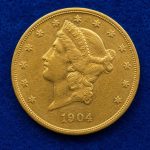
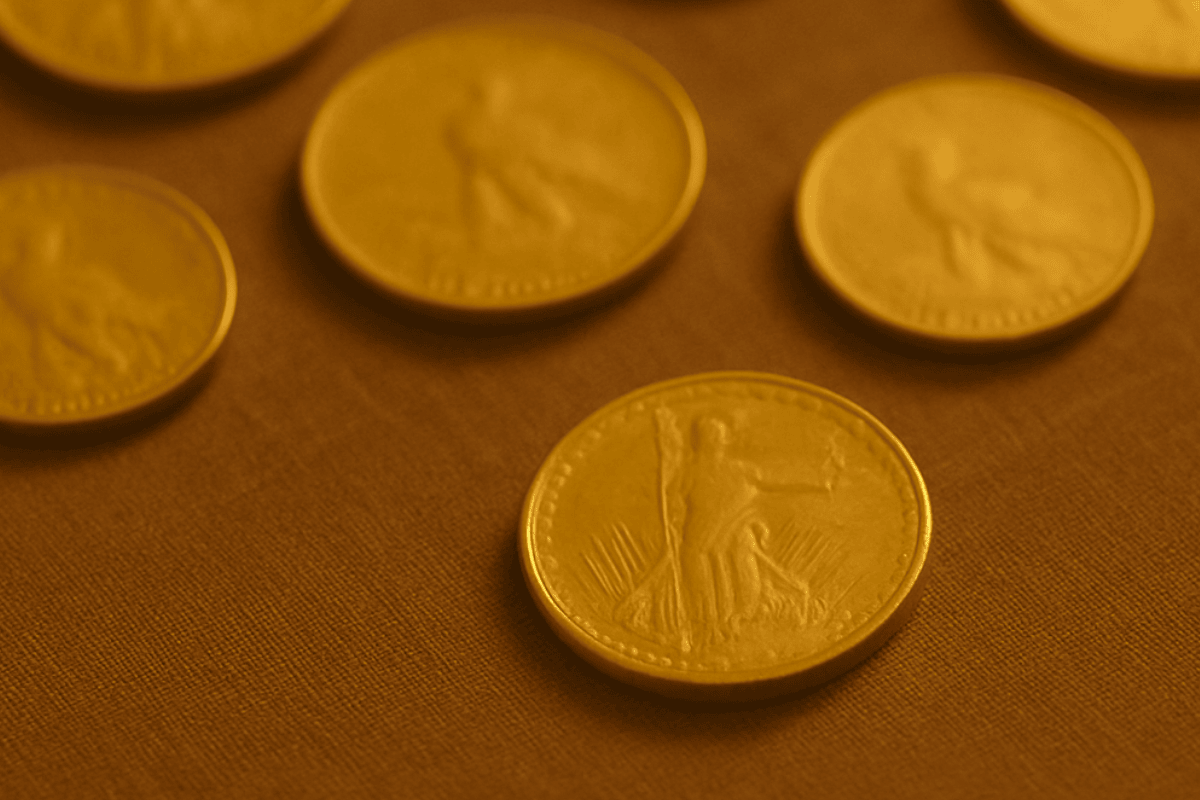
The $20 Double Eagle is the flagship of American gold. Liberty Head issues ran from 1850 to 1907, followed by the Saint-Gaudens design that many consider to be the most beautiful coin the country ever produced.
The 1907 Ultra High Relief, the 1870-CC from Carson City, the 1861 Paquet Reverse, and the infamous 1933 Double Eagle all live in this series.
The 1933 issue remains illegal to own with a single monetized exception, which sold for $18.9 million in 2021, making it one of the most valuable gold coins ever to exist.
How Rare Gold Coins’ Value Is Determined
Four factors drive nearly every price you’ll encounter.
Grade on the 70-Point Scale
Coins are graded from 1 to 70, with 60 and above representing Uncirculated Condition. The jump between adjacent grades can double or triple a coin’s price in scarce series.
Third-party grading services encapsulate coins after authentication and assign a grade, which is why certified coins trade at a premium over raw examples of the same date.
Mintmarks
A tiny letter can multiply value. During the 1838 to 1861 period, both Charlotte (C) and Dahlonega (D) struck gold exclusively, but other mints produced gold coins as well. CC marks Carson City, O marks New Orleans, and S marks San Francisco.
After 1906, however, D indicates a Denver-minted coin. Always check the mintmark before assuming you know what you have, because branch mint issues are usually far scarcer than Philadelphia coins of the same date.
Originality and Eye Appeal
Two coins with identical grades can differ sharply in price. Original surfaces, attractive natural toning, clean fields, and a sharp strike all add value.
Cleaned, polished, or artificially retoned coins lose a large share of their worth, and the damage cannot be undone.
Melt Value as the Floor
Every U.S. gold coin contains 90% gold and carries a baseline bullion value. Common-date Saint-Gaudens Double Eagles and Liberty Half Eagles often trade close to that floor.
When you evaluate rare gold coins’ value, subtract the metal content first, and ask what the numismatic premium is buying you.
Buying Rare Gold Coins Without Getting Burned

Buy the Coin, Not the Story
Compelling backstories can sell coins that don’t deserve premiums. Focus on the certification, the grade, the population data for that grade, and recent auction results for comparable examples.
Auction archives are public and free, and they’re the closest thing to an honest price guide in numismatics.
Learn To Spot Counterfeits
Counterfeit pre-1933 gold has become sophisticated. Basic defenses include weighing the coin on a gram scale, measuring diameter and thickness, and comparing the design against known genuine images, especially date and mintmark placement.
Gold is not magnetic, so any attraction to a magnet is disqualifying. For anything above modest value, buy certified pieces or have raw coins authenticated before money changes hands.
Start With a Type Set
A type set includes one example of each major design rather than every date and mintmark. It’s affordable, educational, and visually satisfying, and it teaches you how each series looks before you commit serious money to a key date.
Storing and Protecting Your Collection
- Never clean a gold coin or any other potentially valuable coin. Even gentle wiping creates hairline scratches that graders detect instantly.
- Store coins in inert holders made from Mylar or certified plastic rather than soft PVC flips, which release chemicals that leave green residue over time.
- Keep humidity low, handle coins by the edges, and maintain a written inventory with photographs, purchase prices, and certification numbers for insurance purposes.
Start Building Your Rare Gold Coin Collection Strategically
Rare U.S. gold coins reward patience and study more than deep pockets. The collectors who do best learn the series first, understand why a date is scarce, verify authenticity before buying, and hold quality coins rather than chasing quantity.
Begin with a type set, read auction results regularly, and let your knowledge lead your spending.
Whether your interest is history, artistry, or long-term value, the American gold series offers a lifetime of discovery. Every great collection starts with one carefully chosen coin.
Frequently Asked Questions About Rare Gold Coins
Are all pre-1933 gold coins rare?
No, not all pre-1933 gold coins are rare. Millions of common-date Half Eagles, Eagles, and Double Eagles survive, and they trade at modest premiums over their gold content. Rarity depends on the specific date, mintmark, and grade combination.
What is the most valuable rare gold coin?
The 1933 Saint-Gaudens Double Eagle holds the record, selling for $18.9 million in 2021. It is the only example that’s legal to own privately, as the rest of the mintage was never officially released.
How can I tell if my gold coin is worth more than melt value?
Identify the exact date and mintmark, and then compare it against survival estimates and recent auction results. If the coin shows little wear and comes from a branch mint or a low-mintage year, professional evaluation is worth the cost.
Should I get my rare gold coins graded?
Grading makes sense when the potential value clearly exceeds the fees and is usually reserved for coins worth several hundred dollars or more. Certification improves liquidity, confirms authenticity, and typically raises the price a buyer will pay.
Are rare gold coins a good investment?
Rare gold coins combine bullion value with collector demand, which can cushion the downsides but also introduces market risk. Treat them as long-term holdings, buy quality over quantity, and never invest money you may need quickly.