


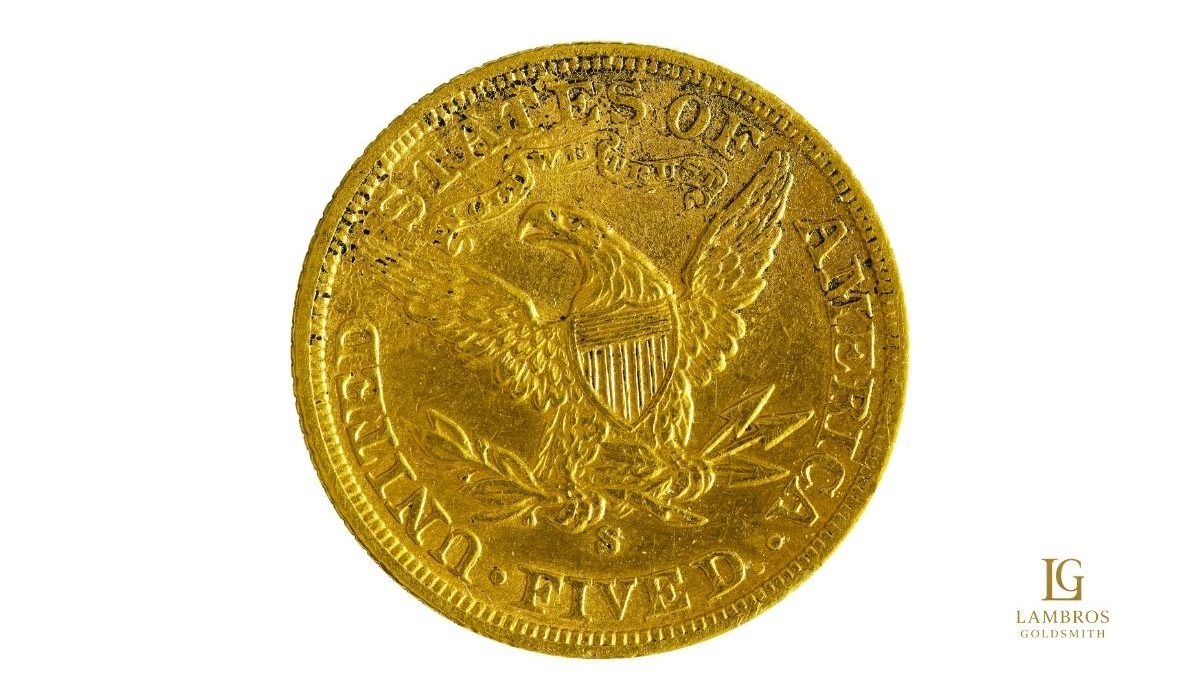
Whether you’re sorting through an inherited collection, thinking about selling a few coins, or simply wondering how much gold coins are worth, the answer isn’t always as straightforward as checking today’s gold price.
While the value of a gold coin starts with its gold content, factors such as rarity, condition, collector demand, and even the coin’s history can significantly increase or decrease what it’s actually worth.
In this guide, you’ll learn exactly what determines gold coin value, how to estimate what your coins are worth, and when professional grading or appraisal may reveal a value far beyond the coin’s melt price.
Whether you own modern bullion or historic U.S. gold coins, you’ll have the information you need to confidently evaluate your collection and make informed decisions.
What Determines the Value of a Gold Coin?
Gold coin values are shaped by a handful of key factors that work together to set a coin’s final price.
Weight and Gold Content
The most fundamental factor is how much gold the coin contains, listed as its Actual Gold Weight (AGW) in troy ounces. A 1 oz American Gold Eagle contains one troy ounce of pure gold, while a British Gold Sovereign contains 0.2354 troy ounces.
Purity and Fineness
Purity refers to the percentage of gold in the coin, expressed as fineness (e.g., .9999 for 99.99% pure) or in karats (24K being pure gold).
A Canadian Gold Maple Leaf is .9999 fine, making it one of the purest gold coins available. An American Gold Eagle is .9167 fine (22K) but still contains a full troy ounce of pure gold because its total weight is slightly higher to account for the copper and silver alloy.
Gold Spot Price
The spot price is the current wholesale price for gold, quoted in U.S. dollars per troy ounce. It fluctuates throughout the trading day based on economic conditions, inflation data, interest rates, central bank activity, and currency movements. The spot price serves as the baseline for any gold coin’s value.
Dealer Premiums
Gold coins sell above spot price. The difference, known as the premium, covers manufacturing costs, distribution, and a dealer margin.
Premiums typically range from 3% to 8% over spot for standard bullion coins, though they can climb higher for fractional sizes or during periods of strong demand.
Numismatic vs. Melt Value
Some gold coins carry value beyond their gold content. This numismatic (or collector) value is driven by rarity, historical significance, condition, and demand among collectors. A coin’s melt value is simply its gold content multiplied by the current spot price.
Condition and Grade
Professional grading services such as PCGS and NGC assign grades on the Sheldon scale, from Poor (P-1) to Perfect Mint State (MS-70).
For bullion coins, condition matters less since they trade close to melt value. For older or rare coins, the difference between a VF (Very Fine) grade and an MS-65 (Gem Mint State) grade can mean thousands of dollars.
Gold Coin Values Today: Popular Bullion Coins
The table below lists the most widely traded gold bullion coins, their specifications, and what you can expect them to be worth based on their gold content at current spot prices. Premiums above spot will vary by dealer and quantity.
| Coin | Weight | Purity | AGW (oz) | Value at Spot |
| American Gold Eagle | 1 oz | .9167 (22K) | 1.0000 | 1.00 × spot |
| Canadian Gold Maple Leaf | 1 oz | .9999 (24K) | 1.0000 | 1.00 × spot |
| South African Gold Krugerrand | 1 oz | .9167 (22K) | 1.0000 | 1.00 × spot |
| American Gold Buffalo | 1 oz | .9999 (24K) | 1.0000 | 1.00 × spot |
| Austrian Gold Philharmonic | 1 oz | .9999 (24K) | 1.0000 | 1.00 × spot |
| Australian Gold Kangaroo | 1 oz | .9999 (24K) | 1.0000 | 1.00 × spot |
| British Gold Britannia | 1 oz | .9999 (24K) | 1.0000 | 1.00 × spot |
| Mexican Gold 50 Peso | 37.5 g | .900 (21.6K) | 1.2057 | 1.2057 × spot |
| British Gold Sovereign | 7.98 g | .9167 (22K) | 0.2354 | 0.2354 × spot |
| Austrian 100 Corona | 33.88 g | .900 (21.6K) | 0.9802 | 0.9802 × spot |
All of these coins are recognized worldwide and trade with strong liquidity, with value tied directly to gold content and the current spot price.
Fractional Gold Coins: Smaller Sizes, Higher Premiums
Fractional gold coins come in 1/2 oz, 1/4 oz, and 1/10 oz sizes, with the American Gold Eagle and Canadian Gold Maple Leaf being the most popular options.
While fractional coins contain proportionally less gold, they carry higher premiums per ounce. A 1/10 oz gold coin might carry a premium of 8% to 15% over spot, compared to 3% to 6% for a full ounce coin, because manufacturing costs per unit of gold are higher for smaller pieces.
Many people prefer the flexibility of fractional gold coins since they can be sold in smaller increments without liquidating an entire ounce.
Melt Value vs. Numismatic Value: Understanding the Difference
One of the most common sources of confusion when valuing gold coins is the difference between melt value, numismatic value, and bullion premium.
- Melt value is the simplest calculation: the coin’s pure gold content multiplied by the current spot price.
- Bullion premium is the markup above melt that covers production, distribution, and dealer costs. Standard bullion coins such as Gold Eagles or Krugerrands trade at melt value plus this premium.
- Numismatic value is where things get more interesting. Rare or exceptionally well-preserved coins can trade far above their melt value. A common-date $20 Saint-Gaudens Double Eagle in circulated condition might sell slightly above melt, but the same coin in MS-65 condition could command a significant premium. A 1933 Double Eagle, one of the rarest U.S. coins ever produced, sold at auction for over $18 million despite containing less than 1 ounce of gold.
For most gold coins, melt value sets the floor. Numismatic value determines the ceiling. See our guide to the most valuable gold coins to learn more.
What Are Pre-1933 U.S. Gold Coins Worth?
Before 1933, the United States minted gold coins in several denominations for everyday commerce. These coins are now prized by both investors and collectors.
| Denomination | Common Name | AGW (oz) | Circ. Value | Mint State Value |
| $1 Gold (Type I) | Liberty Head | 0.04837 | $475–$535 | $600–$1,600 |
| $2.50 Gold | Quarter Eagle (Liberty/Indian) | 0.12094 | $650–$710 | $810–$1,500 |
| $5 Gold | Half Eagle (Liberty/Indian) | 0.24187 | $1,080–$1,100 | $1,130–$7,665 |
| $10 Gold | Eagle (Liberty/Indian) | 0.48375 | $2,125–$2,170 | $2,160–$3,325 |
| $20 Gold | Double Eagle (Lib./St-Gaudens) | 0.96750 | $4,200–$4,225 | $4,240–$5,315+ |
| $20 High Relief | Saint-Gaudens (1907) | 0.96750 | $7,980–$10,290 | $20,475–$54,600+ |
Values vary significantly depending on the specific year, mintmark, and condition.
Key dates and low-mintage years within any series can command prices well above the ranges shown. Having pre-1933 gold coins professionally appraised and graded is one of the best ways to understand their true market value.
How To Determine What Your Gold Coins Are Worth
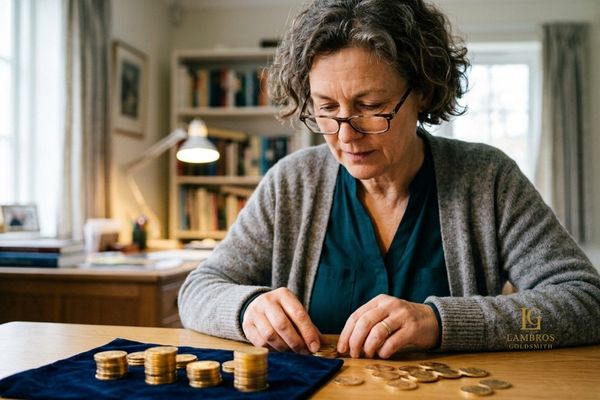
If you have gold coins and want to know their value, follow these steps:
- Identify the Coin: Note the inscriptions, images, denomination, year, and mintmark (a small letter indicating where the coin was produced). Online references can help match your coin to its exact type.
- Check Weight and Dimensions: Use a precision scale to weigh the coin in grams. Compare the weight to published specifications. Significant deviations could indicate a counterfeit.
- Assess Condition: Look for wear, scratches, dents, or discoloration. Uncirculated or mint state coins are worth more than heavily worn examples. Never clean or polish coins, as this almost always reduces value.
- Look Up the Current Spot Price: Check the live gold spot price per troy ounce. Multiply the coin’s AGW by spot to get the current melt value.
- Research Numismatic Premiums: For older, rare, or graded coins, check recent auction results and dealer listings. The numismatic premium above melt can range from negligible to extraordinary.
- Get a Professional Appraisal: For inherited collections, rare coins, or any piece where you suspect the value goes beyond gold content, a professional appraisal is the best path forward.
Gold Plated, Gold-Filled, and Gold Clad Coins
Not all gold-colored coins contain solid gold. Understanding the difference is critical to avoid overvaluing what you have.
- Gold plated coins have a microscopically thin layer of gold over a base metal core. The gold content is negligible, and these coins are worth little beyond face value. Many commemorative coins sold through television ads fall into this category, so beware.
- Gold clad coins have a slightly thicker gold layer bonded to a base metal but still contain only a tiny fraction of an ounce of actual gold. The 24K gold-plated State Quarters or Presidential Dollars you see advertised are gold clad products with minimal gold value.
- Gold-filled items contain more gold than plated pieces (typically 5% of total weight), but this term is more common in jewelry than in coins.
If a deal seems too good to be true for a “gold coin,” it’s almost certainly plated or clad rather than solid gold bullion.
Factors That Can Decrease Gold Coin Value
Several common mistakes and conditions can reduce what a gold coin is worth:
- Cleaning or polishing: Abrasive cleaning strips the coin’s original surface and luster, often cutting its numismatic value by 50% or more. Never clean a gold coin, even if it looks dirty.
- Physical damage: Dents, scratches, rim dings, and bends all lower both grade and value.
- Improper storage: Exposure to moisture, PVC-containing holders, or harsh chemicals can cause discoloration and surface damage over time.
- Alterations and repairs: Coins that have been tooled, plugged, or re-engraved to hide damage are worth significantly less and may be rejected by grading services.
- Mounting damage: Coins that were once set in jewelry bezels often show solder marks or rim damage that permanently reduces their grade.
Inherited Gold Coins: What To Do First
If you’ve recently inherited gold coins, the most important rule is simple: do not clean them. Cleaning is the single most common mistake that destroys value in inherited coin collections.
Take inventory by photographing each coin (front and back), noting any markings, and storing them in a cool, dry place away from other metals. Avoid plastic bags or containers that may contain PVC, which can cause chemical damage over time.
Then, get a professional appraisal. Inherited collections often contain a mix of bullion coins, numismatic pieces, and gold-plated items that look similar to the untrained eye but vary wildly in value.
How To Spot Counterfeit Gold Coins
Counterfeit gold coins are a real concern, especially when buying from unfamiliar sources. Key methods to verify authenticity include:
- Weight and dimensions: Genuine gold coins have precise, published specifications. Even small deviations can indicate a fake.
- The ping test: Genuine gold coins produce a clear, high-pitched ring when tapped. Counterfeits made from base metals produce a dull thud.
- Magnet test: Gold is not magnetic. If a “gold” coin sticks to a strong magnet, it’s not genuine.
- Professional authentication: For high-value coins, submit them to PCGS or NGC for grading and authentication. A certified, slabbed coin provides confidence in both authenticity and grade.
Making Sense of Gold Coin Values
If there’s one takeaway, it’s that the question isn’t simply “How much is my gold coin worth?” It’s “What makes this particular coin valuable?”
Two coins with the same amount of gold can sell for dramatically different prices because of rarity, condition, historical significance, and collector demand.
Whether you’re buying coins, selling coins, or evaluating an inherited coin collection, taking the time to identify your coins accurately and understand what drives their value can help you avoid costly mistakes and spot opportunities others might overlook.
A little research today, and a professional appraisal when warranted, can make the difference between accepting melt value and recognizing a coin that’s worth far more.
Frequently Asked Questions About Gold Coin Values
How much is a gold coin worth?
A standard 1 oz gold bullion coin is worth approximately the spot price of gold plus a dealer premium of 3% to 8%. The exact value depends on gold content, current spot price, condition, and any numismatic premium.
Are gold dollar coins worth anything?
Modern gold-colored dollar coins (Sacagawea, Presidential, and American Innovation) are not made of gold. They are manganese brass and worth their $1 face value. Pre-1889 U.S. gold dollar coins, however, are made of real gold and are worth several hundred dollars or more depending on condition and rarity.
How much is a $5 gold coin worth?
A U.S. $5 gold Half Eagle contains 0.24187 troy ounces of gold. Common dates in circulated condition are worth roughly melt value plus a small premium. Rare dates or mint state examples can be worth significantly more.
How much are American Eagle gold coins worth?
A 1 oz American Gold Eagle is worth the current spot price plus a premium of 4% to 7%. Fractional sizes (1/2, 1/4, and 1/10 oz) contain proportionally less gold but carry higher percentage premiums.
How much are gold plated coins worth?
Gold plated coins contain an extremely thin layer of gold over a base metal and are worth little beyond face value. They shouldn’t be confused with solid gold bullion coins.
How much are gold coins worth today?
Gold coin values change daily with the spot price. Multiply the coin’s pure gold content (in troy ounces) by the live spot price, and then add the typical premium for that coin type.
How do you determine the value of gold coins?
Identify the coin, check its weight and purity, and look up the current spot price. Multiply the coin’s actual gold weight by spot to get melt value, and then research whether the coin carries additional numismatic value based on rarity, date, mintmark, and condition. For valuable or rare coins, a professional appraisal is recommended.


How Much Are $1 Gold Coins Worth? A Complete Value Guide – Lambros Gold Smith
July 21, 2026[…] and online price charts can give you a rough idea of gold coin value. However, they do not tell you whether a coin has been cleaned, lightly repaired, or […]