

Knowing how to sell gold bullion is just as important as knowing when to buy it. Unless you want to leave money on the table, the process involves more than walking into a shop and accepting the first offer you receive.
Whether you inherited a collection, built a portfolio over the years, or simply want to cash in on record-high gold prices, this guide is for you.
We’ll cover everything you need to know about selling gold bullion bars, bullion coins, and rounds, from calculating what your gold is worth to choosing the right selling channel, understanding tax implications, and avoiding common mistakes.
What Is Gold Bullion?
Gold bullion refers to physical gold that’s valued primarily by its weight and purity rather than by rarity or collectible appeal. Bullion is refined to at least 99.5% purity and comes in three main forms:
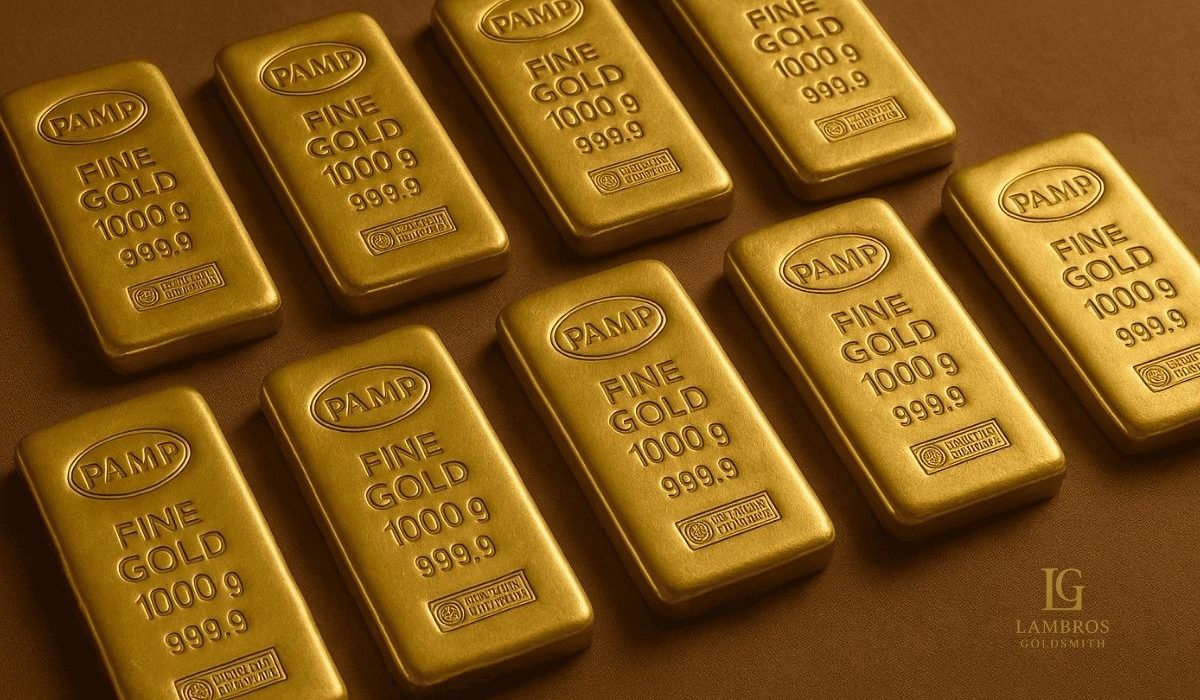
- Gold bars (ingots): Produced by private refiners such as PAMP Suisse, Valcambi, and Credit Suisse in sizes ranging from 1 gram to 1 kilogram. Bars that meet London Bullion Market Association (LBMA) Good Delivery standards are recognized worldwide.
- Gold bullion coins: Minted by sovereign governments, these carry legal tender status but are valued based on gold content. Popular examples include the American Gold Eagle, American Gold Buffalo, Canadian Gold Maple Leaf, South African Krugerrand, and Austrian Gold Philharmonic.
- Gold rounds: Rounds are privately minted and not legal tender, so they typically carry the lowest premiums among bullion products. They’re stamped with weight and purity but lack government backing.
It’s important to distinguish gold bullion from numismatic (collector) coins, which carry additional value based on rarity, mintage, historical significance, and condition.
If you’re unsure whether your gold has numismatic value, a brief consultation with a coin dealer or a professional appraisal can help you determine the right approach. This guide focuses specifically on selling gold for its bullion (melt) value.
How To Calculate What Your Gold Bullion Is Worth
Before selling, you should know exactly what your gold is worth. The calculation is straightforward:
- Check the current spot price of gold. The spot price is the live market rate per troy ounce, and it fluctuates throughout the trading day. You can find it on financial news sites or precious metals dealer websites.
- Determine the weight of your gold. Bullion is measured in troy ounces (1 troy ounce = 31.1 grams). A 10-gram gold bar, for instance, contains 0.321 troy ounces. If gold is trading at $3,000 per ounce, that bar has roughly $963 in gold content.
- Factor in the product premium. Not all bullion products trade at the same percentage of spot. Gold bullion coins such as the American Gold Eagle typically carry higher buyback premiums than generic bars because of government minting, recognizability, and collector demand. Fractional pieces (1/10 oz, 1/4 oz, 1/2 oz) generally trade at a higher percentage over spot than full 1 oz pieces but also carry higher buyback spreads.
Understanding the melt value of your gold before reaching out to dealers puts you in a much stronger negotiating position.
Where To Sell Gold Bullion
Choosing the right selling channel can mean the difference between receiving 96% of melt value and receiving 80%. Here are the main options:
Local Coin Shops and Bullion Dealers
A reputable local coin shop is often the best place to sell gold bullion. Established dealers offer near-spot pricing, immediate payment, and face-to-face transactions. Look for shops with a strong Google review profile, a long track record in the community, and memberships in professional organizations such as the American Numismatic Association (ANA) or the Professional Numismatists Guild (PNG).
Online Bullion Dealers
Online platforms allow you to sell gold bullion from anywhere in the country. Many publish transparent buyback prices on their websites and offer insured shipping labels.
Selling online can be quite convenient, but it does require you to ship valuable items, so make sure the dealer provides fully insured, trackable shipping.
Auction Houses
For larger collections or higher-value pieces, auction houses can generate competitive bidding. However, fees and long payout wait times are the norm, so this option is most relevant if your gold includes items that may bridge the line between bullion and numismatic value.
Peer-to-Peer Sales
Online forums and communities offer another avenue for selling gold bullion, sometimes at prices slightly above what dealers pay. However, peer-to-peer sales carry greater risk. Transactions should be handled through established platforms with verification and escrow protections.
Pawn Shops
Pawn shops will buy gold, but they typically offer significantly less than bullion dealers. Pawn shops operate on wide margins and are generally not recommended if you’re looking to maximize your return.
Can You Sell Gold Bullion to a Bank?
You’d be surprised by how often I hear this question. In most cases, no. Banks in the United States stopped purchasing gold directly from the public after the gold standard ended.
Some international banks may facilitate gold transactions, but for most sellers in the U.S., a bullion dealer is the best choice.
Places To Avoid
“We Buy Gold” shops and traveling buyers who set up temporary operations in hotels or convention centers are known for offering prices well below market value. These operations rely on uninformed sellers.
If you receive an unsolicited offer to buy your gold, whether by phone, mail, or in person, treat it with skepticism.
How Much Should You Get When Selling Gold?

When selling standard gold bullion (bars and coins), here’s a general benchmark for evaluating offers:
- 96% to 99% of spot: Strong offer from a reputable dealer
- 93% to 95% of spot: Fair offer, typical for smaller shops or less liquid products
- 85% to 92% of spot: Weak offer, likely from a middleman or pawn shop
- Below 85% of spot: Unreasonably low; walk away
The best way to sell gold bullion at a fair price is to get at least three quotes from different dealers before committing. Dealer fees and commissions vary, and even small percentage differences can add up quickly on high-value transactions.
How To Verify Your Gold Bullion Before Selling
Authentication protects both you and the buyer, and it can speed up the transaction.
- Check stamps and hallmarks. Reputable bullion products are clearly stamped with weight, purity, and the manufacturer or mintmark.
- Sigma testing. Many dealers use Sigma Metalytics machines, aka Precious Metal Verifiers (PMVs), which use electromagnetic conductivity to verify that a piece is genuine gold without damaging it.
- XRF analysis. X-ray fluorescence provides a precise reading of metal composition and is commonly used by professional dealers.
- Professional grading. While most gold bullion does not require grading from services such as PCGS or NGC, certain bullion coins in exceptional condition may carry a small premium if graded. For the vast majority of bullion sellers, grading is unnecessary.
Having your gold verified before approaching dealers demonstrates preparedness and can help you negotiate more confidently.
Shipping and Insurance Best Practices
If you sell gold bullion online or by mail, proper shipping and documentation are essential:
- Always use insured, trackable shipping. Many reputable online dealers provide prepaid, insured shipping labels. If that doesn’t apply to your situation, fully insure the package yourself.
- Package securely. Use double-boxing with cushioning material. Remove any external cues that indicate the package contains valuables.
- Document everything. Photograph your items and the packaging before sealing. Keep copies of shipping receipts, tracking numbers, and order confirmations.
- Confirm the dealer’s process. Understand how the dealer handles receiving, inspecting, and issuing payment before you ship.
Tax Implications of Selling Gold Bullion
One area that catches many sellers off guard is taxation. In the United States, the IRS classifies gold bullion as a collectible, and profits from selling it are subject to specific rules:
- Capital gains tax. Profits from gold bullion held longer than one year are taxed at a maximum federal rate of 28%, which is higher than the standard long-term capital gains rate for stocks and bonds. Short-term gains (held one year or less) are taxed as ordinary income.
- Cost basis. Your taxable gain is the difference between your sale price and your original purchase price (cost basis). Keep records of what you paid, including any premiums and shipping costs.
- Inherited gold and stepped-up basis. If you inherited gold bullion, your cost basis is typically “stepped up” to the fair market value on the date of the decedent’s death. This can significantly reduce or eliminate capital gains tax on inherited gold.
- 1099-B reporting. Dealers are required to file IRS Form 1099-B for certain bullion sales that exceed specific quantity thresholds. This primarily applies to large transactions, such as selling 25 or more 1 oz Gold Maple Leafs or Krugerrands in a single sale.
- Cash transaction reporting. Any cash payment exceeding $10,000 triggers IRS Form 8300 reporting requirements. This applies to the buyer, not the seller, but it’s important to be aware of.
Consult a tax professional or financial advisor if you have questions about how selling gold bullion will affect your specific tax situation.
When Is the Best Time To Sell Gold Bullion?
The timing of your sale can significantly impact your return. While no one can predict gold prices with certainty, a few indicators are definitely worth monitoring:
- Gold price trends. Gold has historically trended upward over long periods. Selling during a period when prices are near multi-year highs can maximize returns.
- Real interest rates. Gold tends to perform well when real interest rates (adjusted for inflation) are low or negative. Rising real rates can put downward pressure on gold prices.
- Economic uncertainty. Geopolitical tensions, banking crises, and inflationary periods typically drive gold prices higher as investors seek safe-haven assets.
- Storage and insurance costs. If you’re paying for professional storage or insurance, those recurring costs will reduce your effective return. Factoring in holding costs helps determine whether the current price justifies selling.
If you need liquidity and gold is at a reasonable price, selling sooner rather than waiting for a hypothetical peak is often the pragmatic choice.
Tips for Getting the Best Price
- Get multiple quotes. Contact at least three reputable dealers and compare offers.
- Vet your dealers. Check Google reviews, Better Business Bureau ratings, and professional memberships (ANA and/or PNG).
- Know your product. Understand what you’re selling, its weight, purity, and any premiums associated with the specific product.
- Avoid pressure tactics. Legitimate dealers won’t rush you into a decision. If someone pressures you to sell immediately, that’s a red flag.
- Consider timing. Selling during market hours when the spot price is actively trading gives you more control over the price you lock in.
Sell Smart, Not Fast
The difference between a great gold sale and a disappointing one rarely comes down to luck. It comes down to preparation.
By understanding your bullion’s true value, monitoring the spot price, verifying authenticity, and comparing multiple offers, you shift the advantage from the buyer to yourself.
Whether you’re selling a single inherited coin or liquidating a substantial bullion portfolio, patience and research are often worth far more than rushing to the first offer.
Gold has preserved wealth for centuries. When it’s time to sell, taking a disciplined, informed approach helps ensure you preserve as much of that wealth as possible.
Frequently Asked Questions About Selling Gold Bullion Coins and Bars
How do I sell gold bullion bars?
Start by calculating the melt value based on weight and current spot price. Then, contact reputable local coin shops or online bullion dealers for quotes. Compare at least three offers, choose the highest one, and complete the transaction either in person or by shipping your bars using insured, trackable methods.
Where can I sell gold bullion near me?
Local coin shops and bullion dealers are the most common option for selling gold bullion in person. Look for established dealers with strong online reviews and professional credentials. Avoid pawn shops and “We Buy Gold” storefronts, which typically pay well below market rates.
How much does it cost to sell gold bullion?
There is no fixed fee for selling gold bullion. Instead, dealers purchase at a percentage below the spot price, typically between 1% and 7% below melt value depending on the product, quantity, and dealer. Coins and well-known bar brands usually sell closer to spot than generic or less liquid products.
Is it easy to sell gold bullion?
Yes, gold bullion is one of the most liquid physical assets you can own. Standard products such as American Gold Eagles, Gold Maple Leafs, and PAMP gold bars are recognized worldwide and can be sold quickly to virtually any bullion dealer.
Do you pay tax when selling gold?
In the U.S., profits from selling gold bullion may be subject to capital gains tax. Gold is classified as a collectible, so long-term gains are taxed at up to 28%. Short-term gains are taxed as ordinary income. Consult a tax advisor for guidance on your specific situation.
What is the best way to sell gold bullion?
The best way to sell gold bullion is to research the current spot price, get quotes from at least three reputable dealers, and choose the highest offer. Selling to a well-established local coin shop or a reputable online bullion dealer typically provides the best combination of fair pricing and secure transactions.